Zhenzhong Hu

    He received both his BE and PhD degree in the Department of Civil Engineering at Tsinghua University, China. He was a visiting researcher in Carnegie Mellon University.
    He is now the associate professor in Shenzhen International Graduate School, Tsinghua University, and also the secretary general of the BIM Specialty Committee of the China Graphics Society.
    His research interests include information technologies in civil and marine engineering, building information modeling (BIM) and digital disaster prevention and mitigation.
  • 2020-9-21

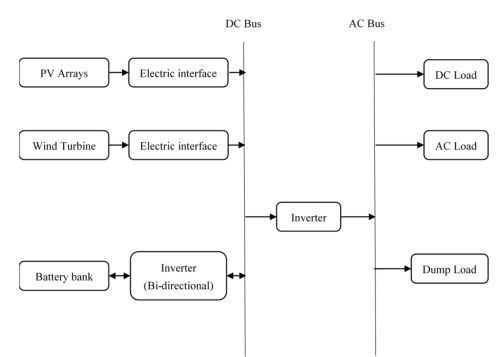
    A Novel Probabilistic Approach to Optimize Stand-Alone Hybrid Wind-Photovoltaic Renewable Energy System has been published in Energies .

    In this paper, a novel probabilistic approach is proposed to optimize a stand-alone hybrid wind-photovoltaic renewable energy system installed in the South China Sea. This approach uses the levelized cost of energy (LCOE) as the objective and the stability of the power generation as the constraint. In addition, the present study proposes a model of a battery-level coefficient, based on which the battery capacity can be probabilistically estimated, given the expected power shortage in a given continuous duration. This model discusses the optimization employing genetic algorithm (GA) when the model estimating the power generated from a hybrid wind- photovoltaic power system (HWPS) with a specific configuration is combined with the widely used cost model. The optimization verifies that the proposed probabilistic approach provides reasonable estimates of the power generation of a hybrid system in an optimization process. The verification reveals that the specifications of the duration to calculate the expected power shortage could have significant impacts on the estimates of power generations. Consequently, the present study performs a sensitivity analysis concerning the continuous power deficit days. The optimization and sensitivity analyses both indicate that the well-established loss of power supply probability (LPSP) criterion of 1% should not be applied universally across the South China Sea. In the areas with more stable winds and solar resources, the LPSP criterion can be relaxed when only the power deficit duration is concerned.

  • 2020-9-4

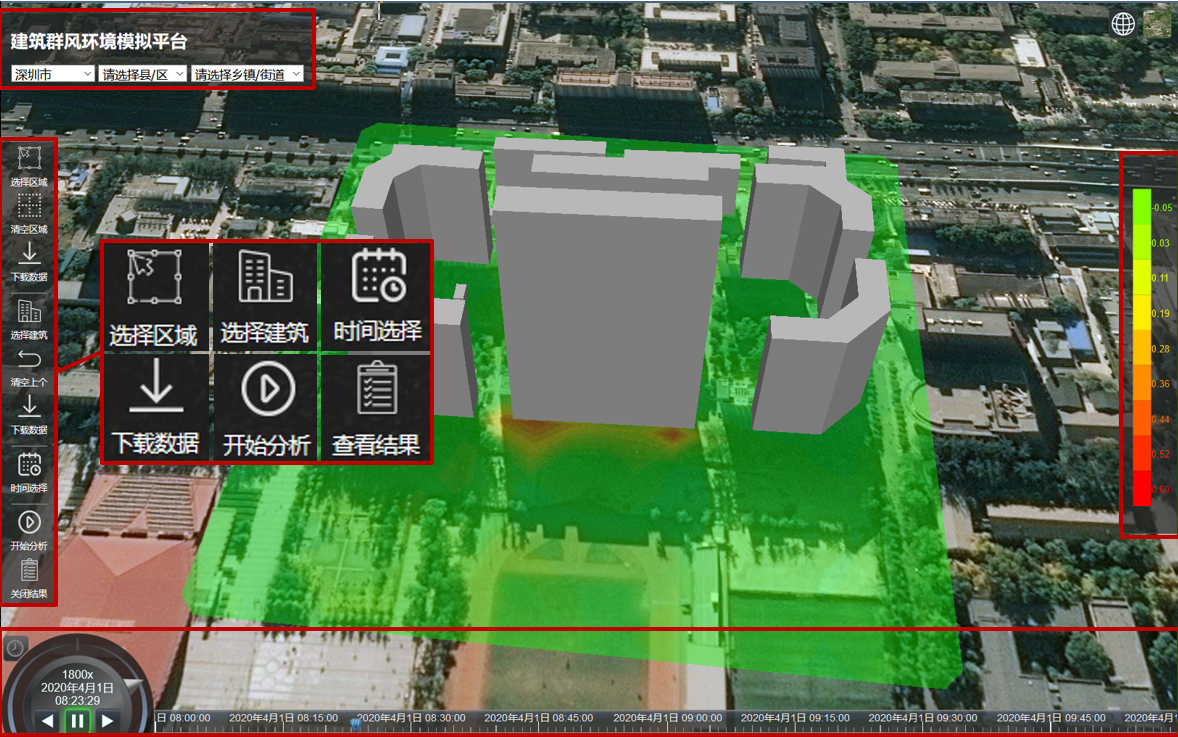
    “BIM/GIS-based wind environment simulation platform for building group in Shenzhen” has won the second prize of the 9th “Longtu Cup” National BIM Competition. The “Longtu Cup” National BIM Competition is organized by the China Graphics Society and is an influential event in the field of BIM research and application in China. The entry was completed in cooperation with the research team of Dr. Sun-Wei Li. from Tsinghua Shenzhen International Graduate School to address the lack of effective analysis tools and accurate building data in the field of building group wind environment simulation, we developed a building group wind environment simulation platform based on BIM and GIS. The platform accessed building and climate data for wind field simulation through open datasets on the Internet, and implements BIM/GIS data integration and storage in the cloud. Subsequently, the platform developed the core simulation module based on the CFD (Computational Fluid Dynamics) software OpenFOAM. Finally, the graphics module was developed based on Cesium to support simulation result visualization and user interaction. Besides Shenzhen, the platform has subsequently implemented support for major cities in China including Beijing, Shanghai and Wuhan. As the highlight, the platform explored the feasibility of combing BIM/GIS with wind environment simulation, and promoted the application of wind field analysis in the AEC industry and epidemic prevention and control.

  • 2020-9-1

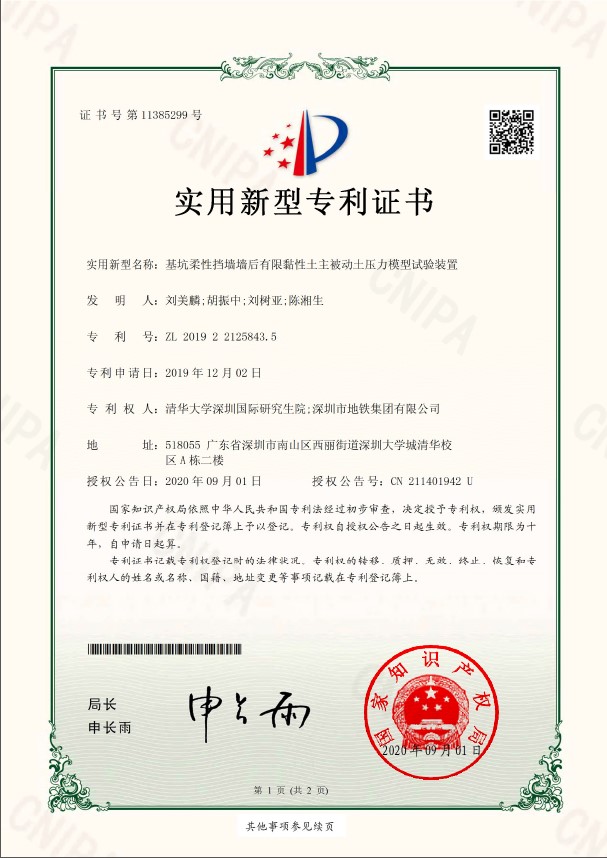
    "Active and passive earth pressure model test device for limited cohesive soil behind flexible retaining wall of foundation pit" has obtained the national utility model patent certificate (Patent No. ZL201922125843.5; Authorization Announcement No. CN211401942U; Certificate No. 11385299). The utility model is a cooperation between the research group and Shenzhen Metro Group Co., Ltd. It provides a model test device for active and passive earth pressure analysis of limited cohesive soil behind a flexible retaining wall of a deep foundation pit. Aiming at the characteristics of the soft cohesive soil commonly encountered in practice, as well as the multiple deformation modes of the retaining structure adjacent to the existing underground structure with large stiffness in the dense environment, the laws and magnitudes of active and passive earth pressures and displacements of soft cohesive soil for different limited soil width were obtained. The model clay is proportional to the weighted average of the physical and mechanical properties of the prototype clay. Transparent movable baffles and grooves are used to control the limited soil width, and displacement control handles are used to precisely control the deformation mode and displacement of the model wall which used to simulate the retaining wall. It has certain engineering application value and reference significance to the deformation, mechanics and stability analysis of foundation pit in dense soft clay.

  • 2020-8-7

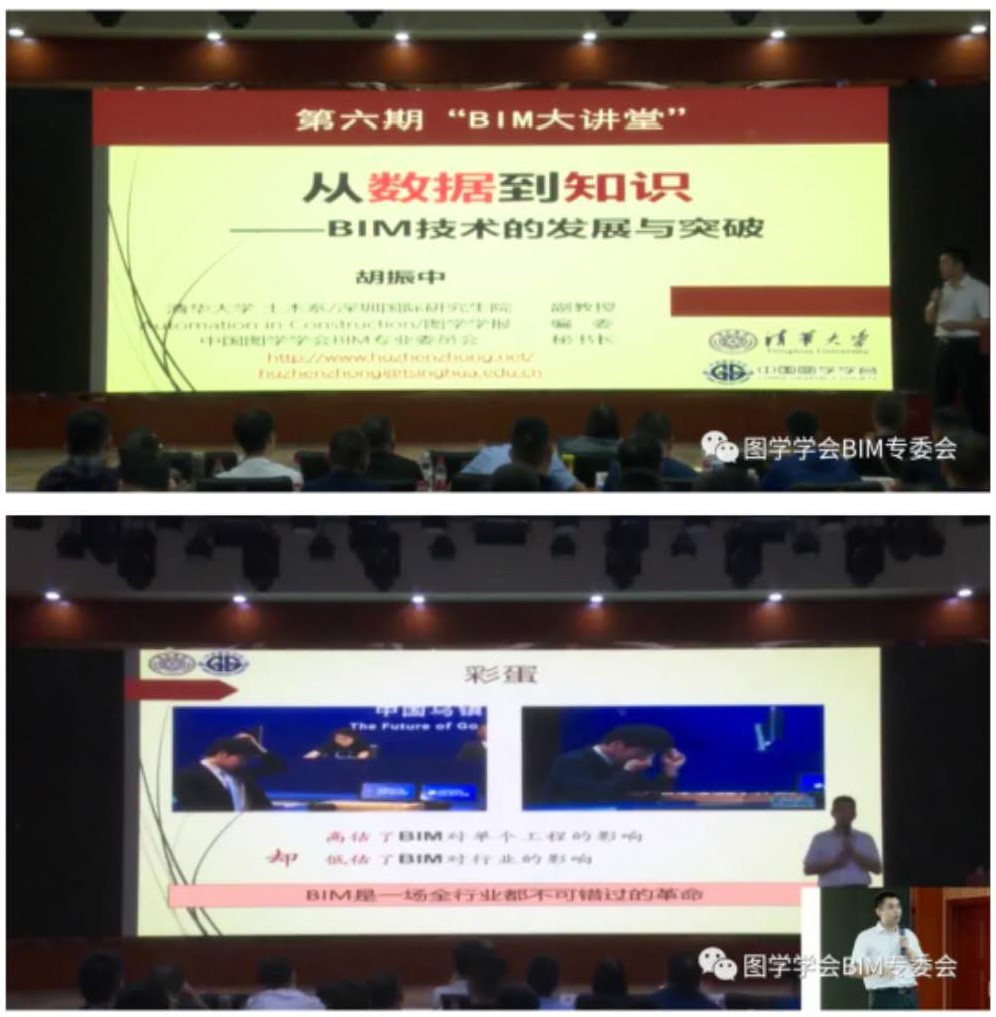
    The sixth "BIM Lecture" hosted by Shanxi Road&Bridge Construction Group Co. Ltd., was successfully held in Taiyuan, the capital city of Shanxi Province. The "BIM Lecture" series are supported by The BIM specialty committee of China Graphics Society and Tsinghua-Glodon BIM Joint Research Center. My PhD supervisor, Prof. Jianping Zhang and me were both invited to give lectures. Yongchun Yao, the vice chief engineer of Shanxi Road&Bridge Construction Group Co. Ltd. chaired the activity. Over 2800 people have attended this online talk show.

    Prof. Zhang in her talk illustrated the concept of smart-BIM and then showed the newly research achievement and application of smart-BIM from the aspects of BIM integrated application, BIM platform support and fusion of smart technologies. Then she presented the trend and coping strategy for the BIM development focusing on the "new infrastructures". In my lecture, through some projects demostration, I detailedly discussed the challenges of ground application of BIM and how does the computer understand and manage BIM data, as well as how do the data create domain knowledge. The main contents mainly include the definition and description of BIM, the management and application of BIM model, and the data mining and knowledge discover from BIM models.


  • 2020-7-1

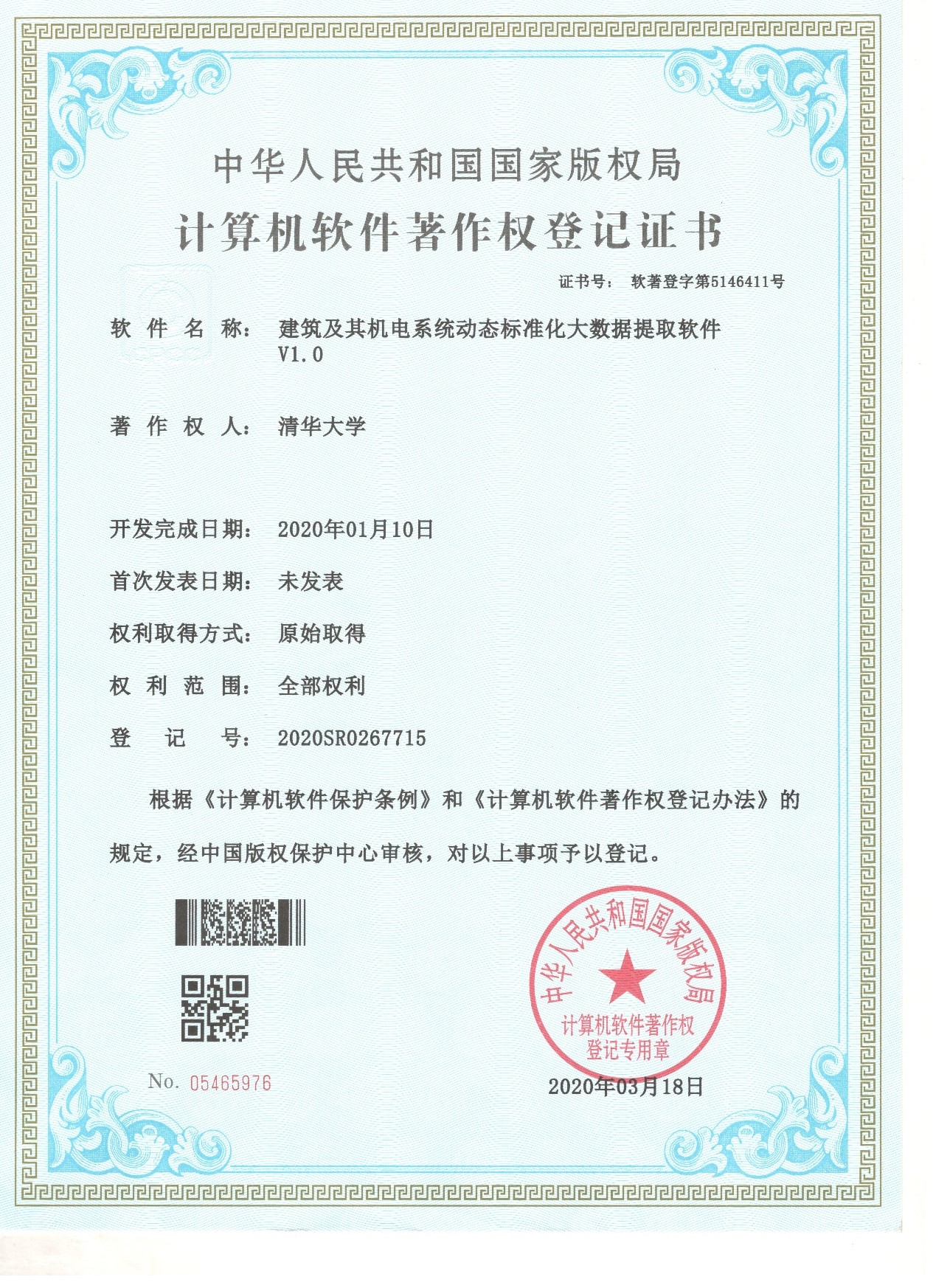
    "Extraction Software for Dynamic Standardized Big Data of Buildings and Attached MEP Systems" has obtained the national computer software registration certificate (Registration No. 2020SR0267715; Certificate No. 5146411). The software was independently developed by the research group, which realized the extraction of standardized dynamic data from heterogeneous energy monitoring systems. Addressing the situation where energy monitoring systems from different manufacturers employ different data formats with no compatibility, causing massive waste of data, and where the original energy data principles were no longer sufficient for the ever-growing energy data analysis demands, the software proposed a energy consumption data model orienting dynamic monitoring, and realized the integration of data from heterogenous sources through implementing the interfaces and data structures in the data model. In the implementation, the software compiled and integrated heterogenous data into standardized big data through establishing relay servers between energy monitoring systems and cloud-end databases. The software hitherto has collected data from over 300 large public buildings nationwide, covering a total building area exceeding 10 million m2, providing large amounts of valuable data for energy consumption analysis and prediction applications.