Zhenzhong Hu

    He received both his BE and PhD degree in the Department of Civil Engineering at Tsinghua University, China. He was a visiting researcher in Carnegie Mellon University.
    He is now the associate professor in Shenzhen International Graduate School, Tsinghua University, and also the secretary general of the BIM Specialty Committee of the China Graphics Society.
    His research interests include information technologies in civil and marine engineering, building information modeling (BIM) and digital disaster prevention and mitigation.
  • 2021-11-26

    26 November 2021, Discharge of treated Fukushima nuclear accident contaminated water: macroscopic and microscopic simulations has been published on National Science Review, which is a full affirmation of the students and teachers of the subject group who are generous and rigorous in their learning! NSR officer micro-push high-quality and efficient, reflecting China's outstanding leading journals of the super-class level! Thanks to the director of singhua University's Institute for Ocean Engineering (IOE), Zhang Jianmin's guidance and support, thanks to the editorial department and reviewers for their high evaluation!

    The results of this study are of great significance for the prediction of long-term spread of pollutants, the rational response of nuclear wastewater discharge plans and the monitoring of subsequent radioactive material concentrations. In the future, we will continue to deepen our research, Further explore the long-term impact of the discharge of nuclear waste water on the whole ocean and mankind, and provide important decision support for the country and the world to deal with the nuclear wastewater crisis!

    Note: National Science Review , whose impact factor in 2021 is 17.275, is the top journal in the multi-discipline domain. For more information, please see the introduction video.

  • 2021-11-16

    A Data Integration and Simplification Framework for Improving Site Planning and Building Design has been published in the journal IEEE Access.

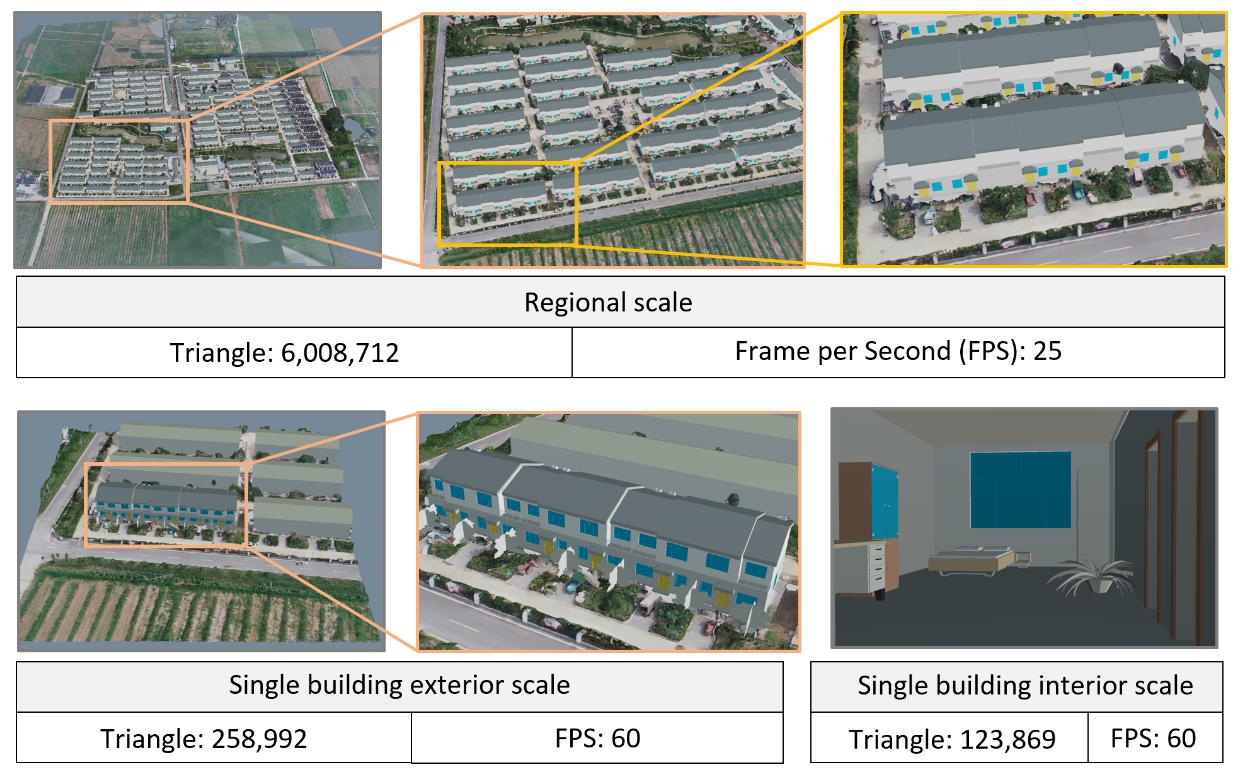
    This paper is the latest research results of the task force in the field of information exchange in building engineering. In the whole life of building, site planning and building design are two closely related stages. However, there are still some obstacles to data exchange in the current two phases. Site planning information is typically based on GIS management. The building design results are generally presented in BIM. Data incontextability makes it difficult for project participants to evaluate planning and design results on a unified platform. In view of this problem, this paper puts forward a cross-stage data integration and simplification framework for site planning and building design. By developing multi-scale data integration model, this study achieves multi-source, multi-scale, multi-format BIM-GIS data integration. Subsequently, this paper develops a geometric optimization algorithm for building models to realize the simplified building models generation of different LODs, to support the model display requirements at different scales. Finally, this paper develops a Web-side visualization platform to support multi-scale planning and design results fusion browsing. This study provides a feasible method for integrating site planning and building design results, which is expected to improve the efficiency of collaborative design process.

    Note: The IEEE Access is an important journal in the field of engineering and technology and belongs to the SCI journal. The research results was supported in part by the National Natural Science Foundation of China.


  • 2021-11-10

    Deep Learning-Based Instance Segmentation for Indoor Fire Load Recognition has been published in the journal IEEE Access.

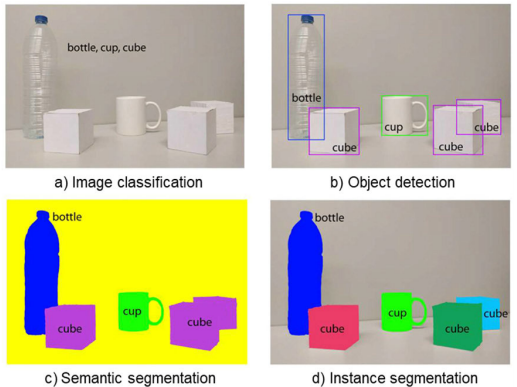
    This article uses deep learning-based instance segmentation to automatically detect indoor fire loads. Accurate fire load (combustible objects) information is crucial for safety design and resilience assessment of buildings. Traditional fire load acquisition methods are relatively time consuming,  tedious, and error-prone, failed to adapt to dynamic changed indoor scenes. Thus, this research proposes a computer vision-based method to automatically detect indoor fire loads using deep learning-based instance segmentation. First, indoor elements are classified into different categories according to their material composition. Next, an image dataset of indoor scenes with instance annotations is developed. Finally, a deep learning model, based on Mask R-CNN, is developed  to detect fire loads in images. Experimental results show that our model achieves promising accuracy and proves the method has high performance characteristics. This research contributes to the body of knowledge 1) a novel method of high accuracy and efficiency for automated fire load recognition in indoor environments based on instance segmentation; 2) training techniques for a deep learning model in a relatively small dataset of indoor images; 3) an image dataset with annotations of indoor fire loads. Although instance segmentation has been applied for several years, this is a pioneering research on using it for automated indoor fire load recognition, which paves the foundation for automatic fire load estimation and resilience assessment for the built environment.

    Note: The IEEE Access is an important journal in the field of engineering and technology and belongs to the SCI journal. The research results was supported in part by the National Natural Science Foundation of China.

  • 2021-10-14

    BIM-based, data-driven method for intelligent operation and maintenance have been published in the Journal of Tsinghua University (Science and Technology).

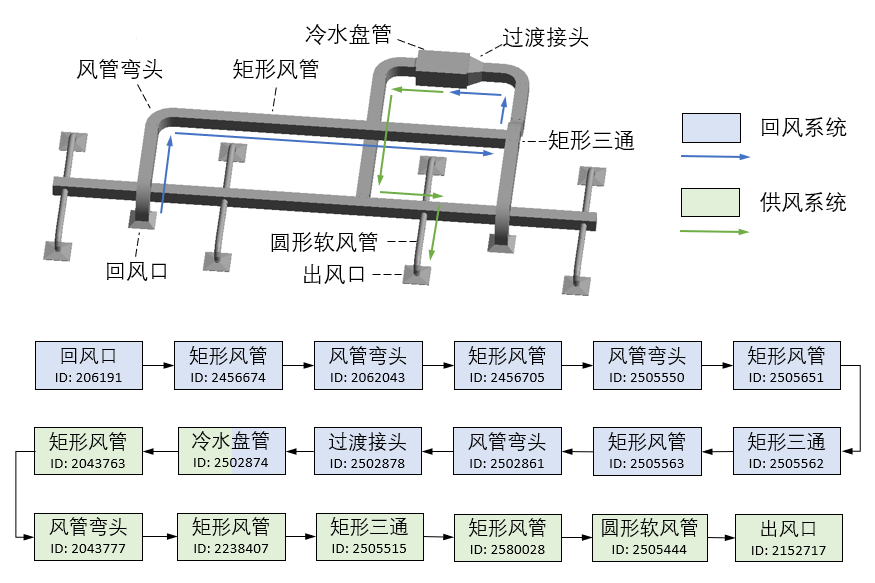
    This paper is the summary of the research results of the BIM-based intelligent operation and maintenance series. Building information models (BIM) provide improved building operation and maintenance (O&M) efficiencies.However, BIM-based intelligent O&M still faces challenges related to data acquisition, integration and analysis. This paper combines BIM and data-driven techniques to develop a solution for intelligent O&M. This approach includes a method to identify upstream and downstream relationships among mechanical, electrical and plumbing(MEP) facilities to supplement the O&M information in BIM. A data cube model is then used to integrate the BIM and building information.Multiple data mining methods including clustering, frequent pattern discovery and neural networks are then used to analyze the O&M data and assist intelligent decision-making.This method reduces the O&M personnel workload, increases the O&M data value,and improves the intelligence level of the O&M management.

    Note: The Journal of Tsinghua University (Science and Technology) is an important journal in the field of engineering and technology and belongs to the EI journal. The research results were funded by the National Natural Science Foundation of China and the Shenzhen Science and Technology Research and Development Fund.

  • 2021-09-18

    The 8th BiM Special Committee Meeting of the China Graphics Society was held today. The meeting adopted the list of members of the 8th BIM Special Committee, the Regulations on the Management of the Professional Committee of the Building Information Model (BIM) of the China Graphics Society (revised in August 2021) and the Measures for the Re-election of the Special Committee on Building Information Models (BIM) of the China Graphics Society ("Election Method"), and I was elected as the Deputy Chairman of the 8th BIM Special Committee. Ma Zhiliang, Chairman of the 8th BIM Special Committee, co-chaired the meeting.

    Finally, I sincerely thank you for your trust and support, and sincerely wish the 8th BIM Special Committee to inherit and carry forward the fine tradition, keep pace with the times, and strive to forge ahead!