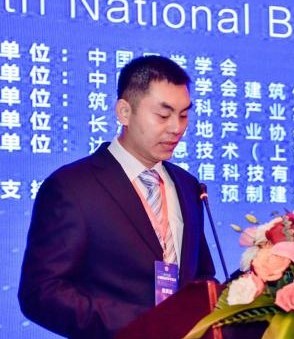
Zhenzhong Hu

    He received both his BE and PhD degree in the Department of Civil Engineering at Tsinghua University, China. He was a visiting researcher in Carnegie Mellon University.
    He is now the associate professor in Shenzhen International Graduate School, Tsinghua University, and also the secretary general of the BIM Specialty Committee of the China Graphics Society.
    His research interests include information technologies in civil and marine engineering, building information modeling (BIM) and digital disaster prevention and mitigation.
  • 2025-11-14

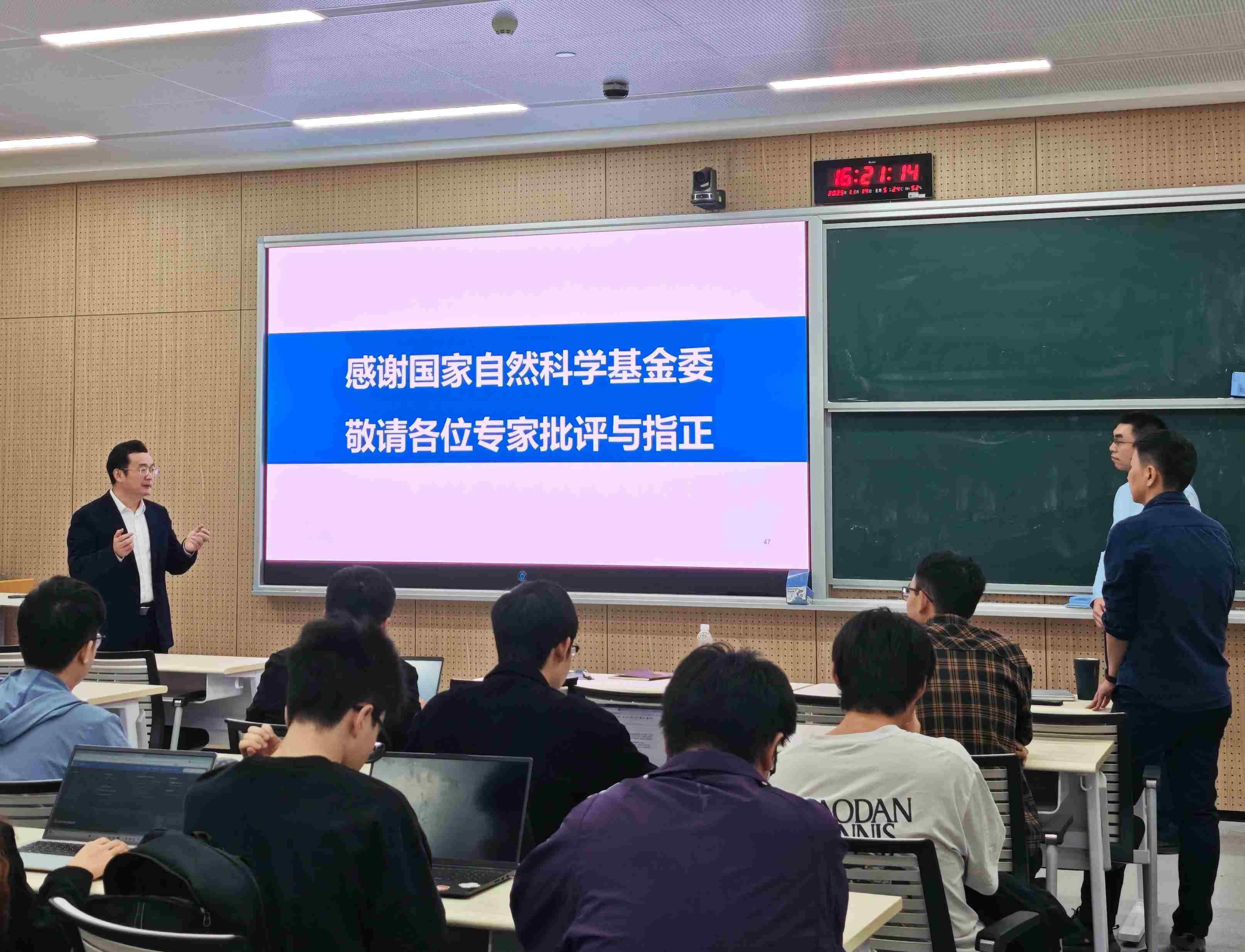
    On the afternoon of November 14th, Professor Mao Liang, the dean of the School of Environmental and Biological Engineering at Nanjing University of Science and Technology and a recipient of the National Science Fund for Distinguished Young Scholars, was invited by me to give an academic report titled "Ecological Risks, Mechanisms of Effects and Pollution Control of Typical Radionuclides in the Ocean" in our college. 

    With the global application of nuclear energy and the influence of historical nuclear activities, the discharge of radionuclides into the sea and their ecological risks have increasingly drawn attention. The incident of Japan's discharge of nuclear wastewater from Fukushima has made this issue a global focus. Professor Mao Liang systematically introduced the tracking of the distribution, migration, and transformation of radionuclides in multi-phase environments such as seawater and sediments based on a radionuclide analysis platform. He also delved into the kinetics of radionuclide absorption, enrichment, distribution, and excretion in marine organisms (from primary producers to top consumers), revealing the toxic effects at the cellular and molecular levels. Additionally, he combined his team's research achievements in enzyme catalysis (such as lignin peroxidase and laccase) for degrading organic pollutants and the transformation of nanomaterials through Fenton reactions to explore new pathways for controlling and remediating marine radionuclide pollution based on biocatalysis and advanced oxidation technologies, providing scientific basis and forward-looking ideas for the management of marine radioactive risks. 

    Note: Professor Mao Liang has long been engaged in research in the field of environmental chemistry. He has published over a hundred papers in journals such as Nature Sustainability, Angewandte Chemie International Edition, National Science Review, National Science Open, ACS Nano, and Environmental Science & Technology. He has received numerous awards including the First Prize of Natural Science of Jiangsu Province and the Second Prize of Natural Science of the Ministry of Education. He also serves as an expert reviewer for multiple national research projects and as an editorial board member for several academic journals.

  • 2025-11-03

    The paper "Three-dimensional spatiotemporal simulation of tritium discharge from Fukushima" has been published in the journal Ocean Modelling. 

    The ALPS treated water has been discharged into the Pacific Ocean since August 2023.  This study investigates this discharge using a newly developed three-dimensional dispersion model that incorporates migration, diffusion, and decay processes of radionuclides.  A simulation over ten years is conducted using reanalyzed oceanographic data.  The results indicate that tritium released from Fukushima primarily disperses eastward along the 35°N latitude line.  In later stages, local concentration peaks emerge in the northeastern Pacific, exceeding those in the northwest Pacific.  For the vertical distribution, the tritium is generally reduced greatly with depth, but displays maximum values at subsurface layer (∼50m) in some regions.  The concentration reaches a steady state over time, defined as the characteristic concentration, whose spatial distribution and attainment time are detailed.  For major fishing grounds in the Pacific Ocean, the Hokkaido area shows the highest tritium levels, followed by Hawaii, California, Zhoushan, the Korean Peninsula, Mexico, the Philippines, Alaska, and Peru in descending order.  Critically, simulated tritium concentrations in most North Pacific regions (∼0.01 Bq/m3) remain orders of magnitude below natural background levels (∼50 Bq/m3).  This research elucidates three-dimensional radionuclide dispersion mechanisms in global oceans, providing a quantitative methodology for future marine emergency response and contributing to long-term marine conservation efforts.

    Note: Ocean Modelling is a Q1 journal in the field of geosciences with an impact factor of 2.9. The first author of the paper is doctoral student Liu Yi, and I and Professor Chen Shengli are the corresponding authors. The research was funded by the Guangdong Provincial Foundation for Basic and Applied Basic Research and the Laoshan Laboratory.

  • 2025-11-01

    On November 1st, the 4th China Ocean Engineering Science and Technology Innovation Forum and the Inauguration Ceremony of the Journal "Ocean" were grandly held at Tsinghua SIGS, co-organized by Tsinghua SIGS and the Institute of Ocean Engineering of Tsinghua University, which was hosted by the Chinese Society of Oceanography. Academicians Zhang Jianmin and Ou Jinping of the Chinese Academy of Engineering, Liu Bilu, the vice dean of Tsinghua SIGS, relevant officials from the Shenzhen Marine Development Bureau, and nearly 400 experts and scholars from more than 30 domestic universities, enterprises and institutions attended this forum together.

    This forum, with the theme of "Empowering with Digital Intelligence, Advancing into the Deep Sea", focuses on the key "pain points" in the field of Marine engineering. It conducts in-depth discussions on the sustainable development path of deep-sea exploration and the construction of a maritime power, aiming to promote the coordinated development of the innovation chain and the industrial chain, facilitate the deep integration of industry, academia, research and application, and lead Marine engineering towards intelligence, greenness and unmanned operation. During the forum, the launch ceremony of the journal "Ocean" was held simultaneously. This journal is hosted by Tsinghua University and published by Tsinghua University Press. Institute for Ocean Engineering provides academic support. It is fully independently built and operated based on the SciOpen platform. In the future, it will be committed to building a high-level international academic exchange platform in the field of Marine engineering. At the end of the forum, I made a concluding speech.

    The successful holding of this forum not only consolidated the consensus of multiple parties including industry, academia and research, but also provided an important platform for global scholars to share innovative achievements, and will become a bridge to promote the development of disciplines and the transformation of achievements.

  • 2025-09-29

    On September, 2025, the Essential Science Indicators (ESI) database was updated to show that in the internationally renowned journal Environmental Science & Technology (ranked in the first zone of the Chinese Academy of Sciences), The Paper "Fukushima Contaminated Water Risk Factor: Global Implications" published in IF = 11.3 was selected as an ESI Highly Cited Paper.

    In response to the lack of quantification and integration in the risk assessment of the discharge of nuclear-contaminated water from Fukushima into the sea, the research team innovatively proposed the "Fukushima Nuclear-Contaminated Water Risk Factor" (FCWRF). This indicator integrates the three major risks of nuclide diffusion, bioenrichment and global seafood trade, achieving a comprehensive quantitative assessment of risks. Research shows that the combined risk will spread to six continents around the world, and its spread speed is six times faster than that driven by ocean currents. FCWRF Bridges the barriers between different fields of radionuclide risk assessment and provides a scientific basis for formulating global response strategies. Furthermore, the team has released the Fukushima risk visualization website, which dynamically displays the spatiotemporal evolution of FCWRF and makes the data available for download.

    Note: ESI highly cited papers refer to academic papers published in the past ten years and ranked in the top 1% of global citations in the same discipline. They can provide references for cutting-edge research in the discipline and can be used in the scientific research evaluation system.

  • 2025-09-20

    On September 20th, marking the 45th anniversary of the founding of the China Graphics Society, the 10th China Graphics Conference officially kicked off in Wuhan, Hubei Province. This conference, themed "Intelligent Computing Symbiosis · Graph Opening a New Chapter", is hosted by the China Graphics Society. The participants, centering on the three main lines of "original software, key equipment, and scene applications", jointly explored new paths for the deep integration and innovative development of graphics and intelligent technologies.

    At the conference, I was honored to be awarded the title of "Outstanding Individual Member" by the China Graphics Society. This honor is an affirmation of my active participation in the society's work and my efforts to promote the development of graphics over the past five years (2021-2025). At the same time, the second meeting of the 8th Editorial Board of the Journal of Graphics was successfully held. I was honored as a dedicated and devoted editorial board member of the Journal of Graphics in 2025 and delivered a speech as a representative of the awardees. These honors are not only encouragement but also motivation.

    This conference lasts for three days and has organized over 40 academic activities, covering various aspects such as cutting-edge forums, technical discussions, and popular science lectures, providing a high-quality platform for communication and cooperation for experts and scholars in the field of graphics.